
From Driveway to Dinner Table
If you’ve ever looked at an older vehicle in your driveway and wondered, “Is this still worth something?” - the answer is often yes. And with Homeless Cars, that “something” can become meals for people in your community who are feeling the squeeze at the grocery store.
In Canada, food insecurity has reached record levels. New national data shows 25.5% of people in the ten provinces lived in a food-insecure household in 2024—about 10 million people, including 2.5 million children. That reality shows up directly at food banks too. In March 2025 food banks saw nearly 2.2 million visits in Canada, the highest on record, and usage has doubled since March 2019.
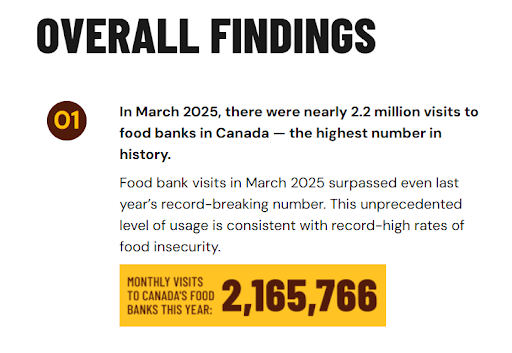
Image from Food Banks Canada
So where does car donation fit in? Right at the intersection of simple action and direct, measurable local impact.
One Donation → Real Dollars → Real Meals
At Homeless Cars, we turn vehicle donations into funding that supports our trusted local charity partners, including food-security organizations. Depending on the vehicle, one donated car can help fund meals for 150+ people through local programs, all while helping stock shelves, supply meal programs, and support dignified access to food.
This is “driveway to dinner table” in the most practical sense:
You donate your car
We arrange the pickup (fast + free towing)
Your vehicle is sold or recycled responsibly
Proceeds help fund local charities in your community
Your donation becomes meals, groceries, and real relief for families
Why Food Security Needs Support in Canada Right Now
Food insecurity isn’t only about empty cupboards. It’s the constant pressure of choosing between groceries and rent, gas, childcare, medication, or utilities.
Here’s what the data tells us:
Food insecurity is rising year over year. Statistics Canada analysis shows household food insecurity in the ten provinces increased from 18.4% (2022) to 22.9% (2023).
2024 hit another record. PROOF reports 25.5% of people in the ten provinces lived in a food-insecure household in 2024, including 2.5 million children.
Food banks are stretched. Food Banks Canada reports unprecedented demand, with nearly 2.2 million visits in March 2025.
The takeaway: need is high, and community-based solutions matter. That’s where donating a vehicle becomes more than “getting rid of an old car.”
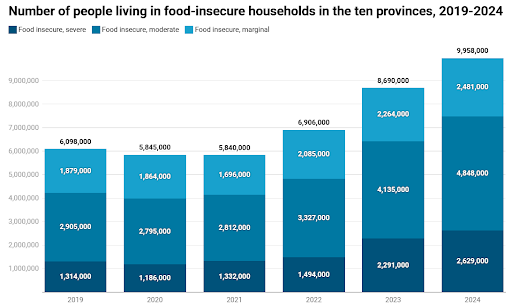
Image from Proof
The Homeless Cars donation process
If you’re new to donating a car, here’s what to expect.
1) Start your vehicle donation
You reach out to Homeless Cars to begin the donation process. You’ll share a few basics:
Location
Vehicle details (make/model/year, condition)
Pickup availability
2) Free towing + quick pickup
We coordinate the pickup and towing—at no cost to you
3) Vehicle is sold or recycled responsibly
Your car is assessed and converted into proceeds through appropriate channels, whether that’s resale, parts, or recycling—depending on its condition.
4) Proceeds support local charity partners
Homeless Cars is a Canadian charitable foundation and works with trusted local charity partners, helping ensure the funds support programs that matter in your community.
5) You receive documentation for your records
You’ll receive the necessary donation paperwork (including the tax receipt) so you can keep everything organized.